
桑原 ゆう
3Apr2019_In Conservatorio con Mario Marzi l'omaggio a Donatoni
ミラノにて、フランコ・ドナトーニ賞受賞によりディベルティメントアンサンブルに委嘱された、バリトン、日本語の朗読とアンサンブルのための新作《A world under the world》が初演されました。
On 3rd April in Milan, my new piece "A world under the world" for baritone, reading in Japanese, and 7 musicians, was premiered.
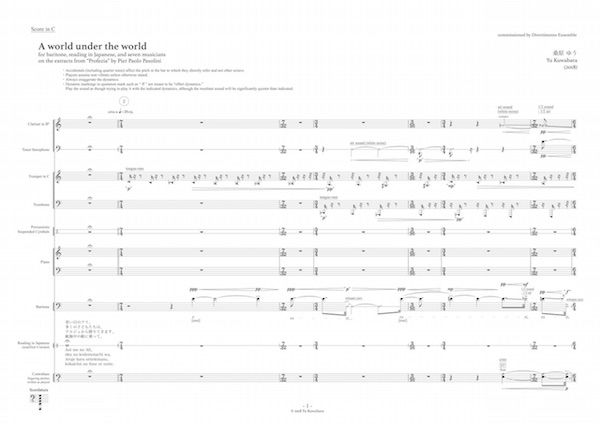
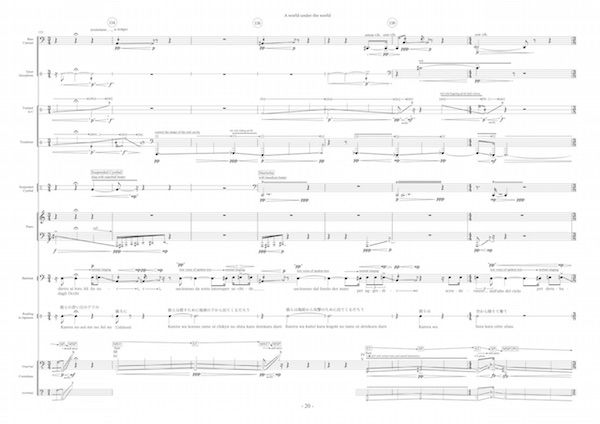
This piece was commissioned by Divertimento Ensemble as one of the winners of the Franco Donatoni Competition, which is based on today's social theme "migration" given by them to us with the text by Pier Paolo Pasolini. At first, I was so confused because I hadn't imagined thinking about "migration" would be able to connect with my creation directly, and I hadn't known about Pasolini. But I started learning his creations to know about him and thinking about the theme.
What kind of problem immigrants would face at first in their new place? It might be a problem of language, in other words, how they can communicate with local people. My idea on this work is based on thinking about what kind of multilingual situation the immigrants are.
So I decided to treat the same poem both in Italian and in Japanese. For baritone, I used the original "Profezia" by Pasolini, and for the reading part (I will perform by myself this time), I used the one translated into Japanese. Using two languages at the same time, I would like to show a musical world in-between comprehensible words and incomprehensible words for the audience. However, also for those who can understand both Italian and Japanese, this work doesn’t make any sense. Because this Japanese translation is totally broken in both grammar and poetic meaning. It was made by the google translation automatically and I didn’t make any correction on it. I found a way to use this broken Japanese translation would fit my idea, and I expected it would this piece one more layer of meaning and deepen my question.
今回は"migration"というテーマと、イタリアの作家パゾリー二のテキストを使うという提案がありました。そのテーマが自分の創作に直接つながると考えたことがなかったし、パゾリーニのことも知らなかったので、最初はどうしようかと思いましたが、いつも通り彼の作品と彼を知ること、つまり、著作を読むことと映画を見ることから始めました。テーマについては、自分自身の状況に置き換えて考えてみると、初めての場所に来てなにが大変って、やはり言語の問題、コミュニケーションの問題だと思いました。考えた末、最後の最後に、イタリア語と日本語の両方を用い、ミラノの聴衆にとってわかる言葉とわからない言葉の狭間で音楽を書いてみようというアイデアに至りました。使用したテキストは、パゾリーニの《青い目のアリ》から《Profezia》という部分です。イタリア語はバリトン歌手に、日本語は朗読パートに。パゾリーニ作品の日本語翻訳はまだとても少ないようで、このテキストに関しては日本語訳が見つかりませんでした。そして、私もイタリア語はできないので、google翻訳にかけました。もちろんできあがったのはとんちんかんな日本語訳なのですが、この作品ではわざとそのまま用いることにしました。文章としても詩としても成り立っていないものを情報として聞かせることが、このテーマにもう一段階の謎を与えてくれると思ったからです。知らない言語だとしても、ポエジーなパワーを持った作品なら、どんな形で提示されてもそれを感じとれるのでは、という期待もこめました。でたらめ日本語詩をもっともらしく私自身で朗読し、自分にしかできない方法で今回のテーマを考えられた満足感があり、この作品を発表できたことを嬉しく思います。
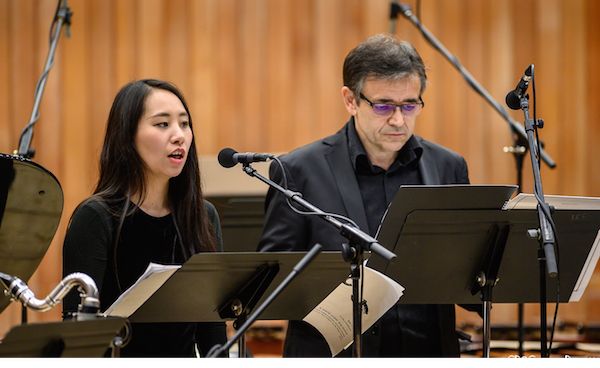
本番、朗読している様子。(ディベルティメントアンサンブルのウェブサイトより)
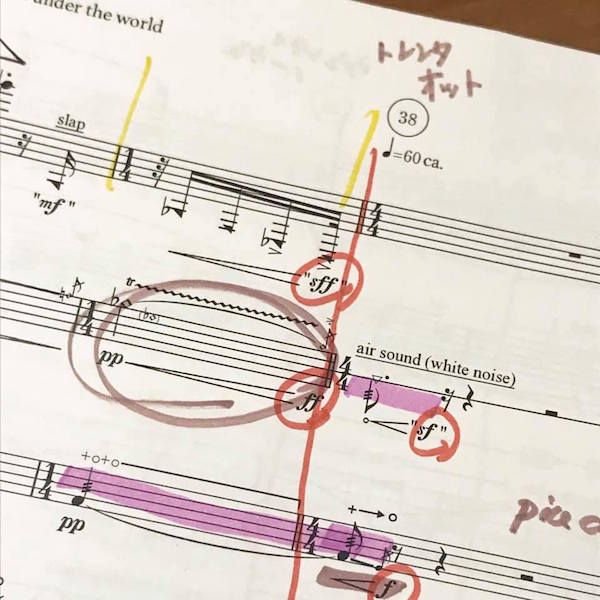
おまけ: 指揮のサンドロがときどき小節番号をイタリア語で言うのですが、たまに混乱してすぐに反応できないことがあるので、カタカナで書いてあります...
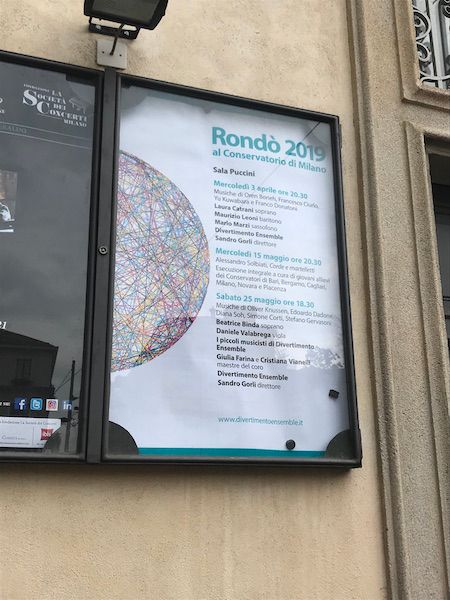
Alla Sala Puccini del Conservatorio i vincitori degli Incontri internazionali per giovani compositori “Franco Donatoni”
Oren Boneh (1991), Ritorno di lontano (2019)
Yu Kuwabara (1984), A world under the world (2018-19)
Franco Donatoni (1927-2000), Hot (1989) per saxofono e ensemble
Analisi di Hot ad opera di Sandro Gorli
Franco Donatoni, Hot, (seconda esecuzione)
3 April 2019
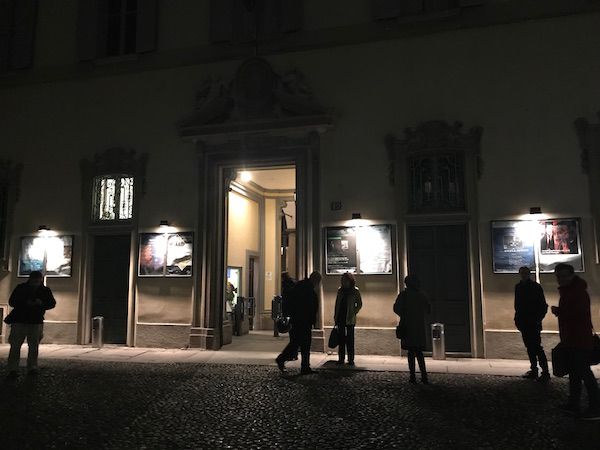
Conservatorio di Musica G. Verdi di Milano, Via Conservatorio, 12, 20100 Milano MI, Italy
Maurizio Leoni, baritone | Mario Marzi, tenor saxophone | Yu Kuwabara, reading in Japanese
Divertimento Ensemble | Sandro Gorli, conductor
www.divertimentoensemble.it/eventi/
-----
旧ブログ "桑原ゆうの文化的お洒落生活のすすめ"はこちら (現在少しずつ記事を移行中です。)